The New York Times article that changed everything.
In October 2017, at the height of the #MeToo era, The New York Times published a sensational portrayal of NXIVM and DOS — a secret women’s group Mr. Raniere founded with several other women — that instantly made him and the organization nationally radioactive.
The allegations centered heavily on the receiving of a “brand” — a process using an electrocautery pen akin to tattooing.
Despite dominating the media coverage, the “branding” never became a criminal charge in the prosecution.
New York State Police separately reviewed the underlying conduct — including the so-called “branding” allegations — and concluded it was “consensual.” This appeared in The New York Times’s own article, in its own words.
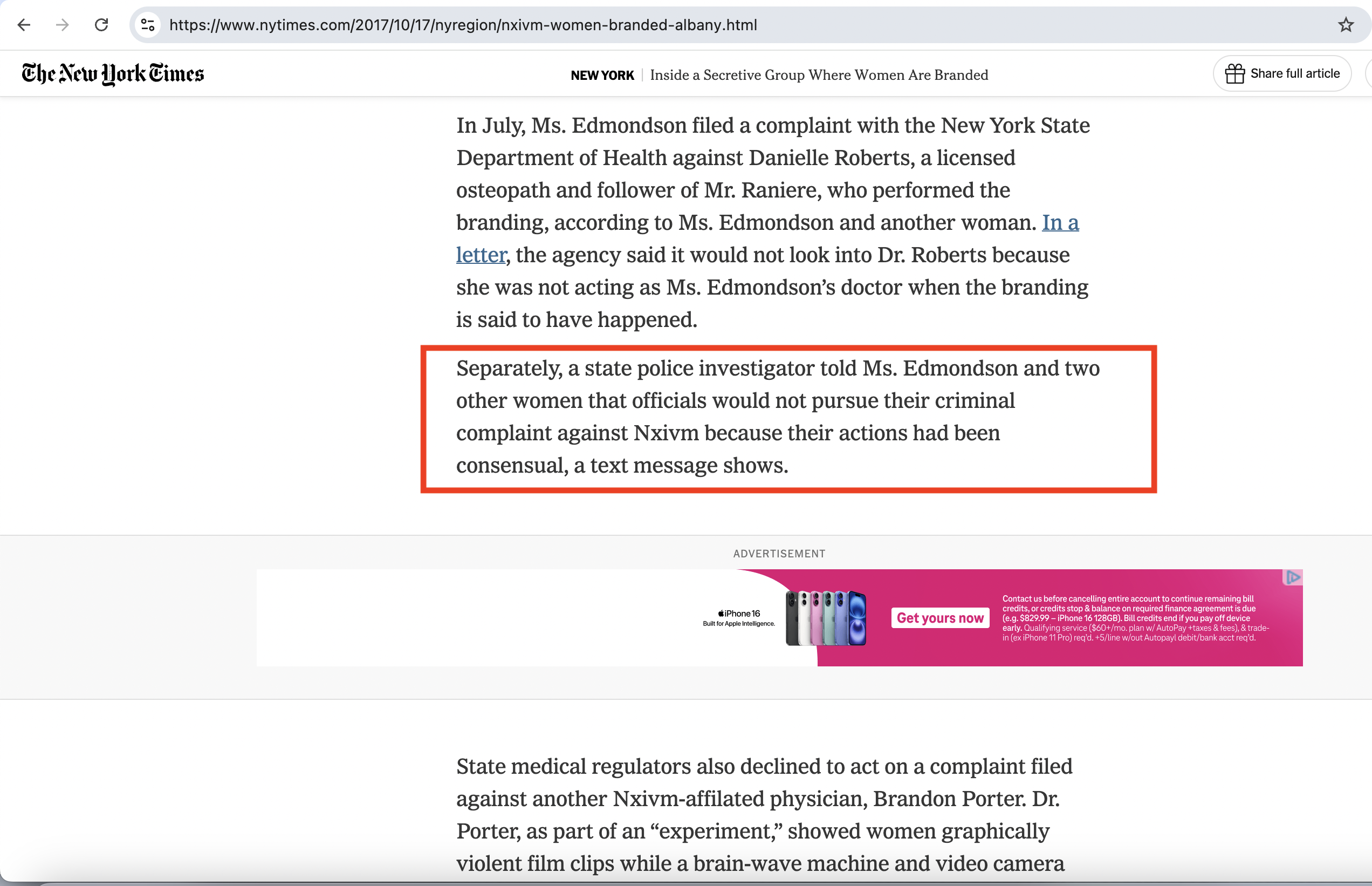
The Northern District of New York (NDNY) — where the alleged conduct had occurred — had already been approached, months earlier, with the underlying allegations, according to the trial testimony of government witness Mark Vicente. NDNY did not prosecute.
So How Did EDNY Start a Case?
In her own words. Lead prosecutor Moira Kim Penza later stated, on camera in the STARZ docuseries Seduced, that she read the New York Times article, immediately sprang into action, and within days EDNY had assembled a federal task force and launched the prosecution.
“When I read the New York Times article, it immediately felt apparent to me that there was criminal conduct going on and that there must be a lot more to what I was reading about. And so I started digging in. My office very quickly got an amazing team of FBI agents on board and within days really, we were interviewing witnesses and victims.” — Moira Kim Penza, lead EDNY prosecutor
A sensational newspaper article about alleged consensual conduct in Albany supposedly triggered, almost overnight, a massive federal prosecution more than 150 miles away in Brooklyn — in a different federal district that had not been approached in the first place.
What Reportedly Happened Shortly Before the NYT Article Was Published.
According to a blogger openly hostile to Mr. Raniere and NXIVM, what actually occurred shortly before publication of the article was a private meeting among three Mexican titans — Carlos Salinas, Carlos Slim (then the largest single shareholder of The New York Times), and Alejandro Junco — to discuss “the NXIVM problem.”
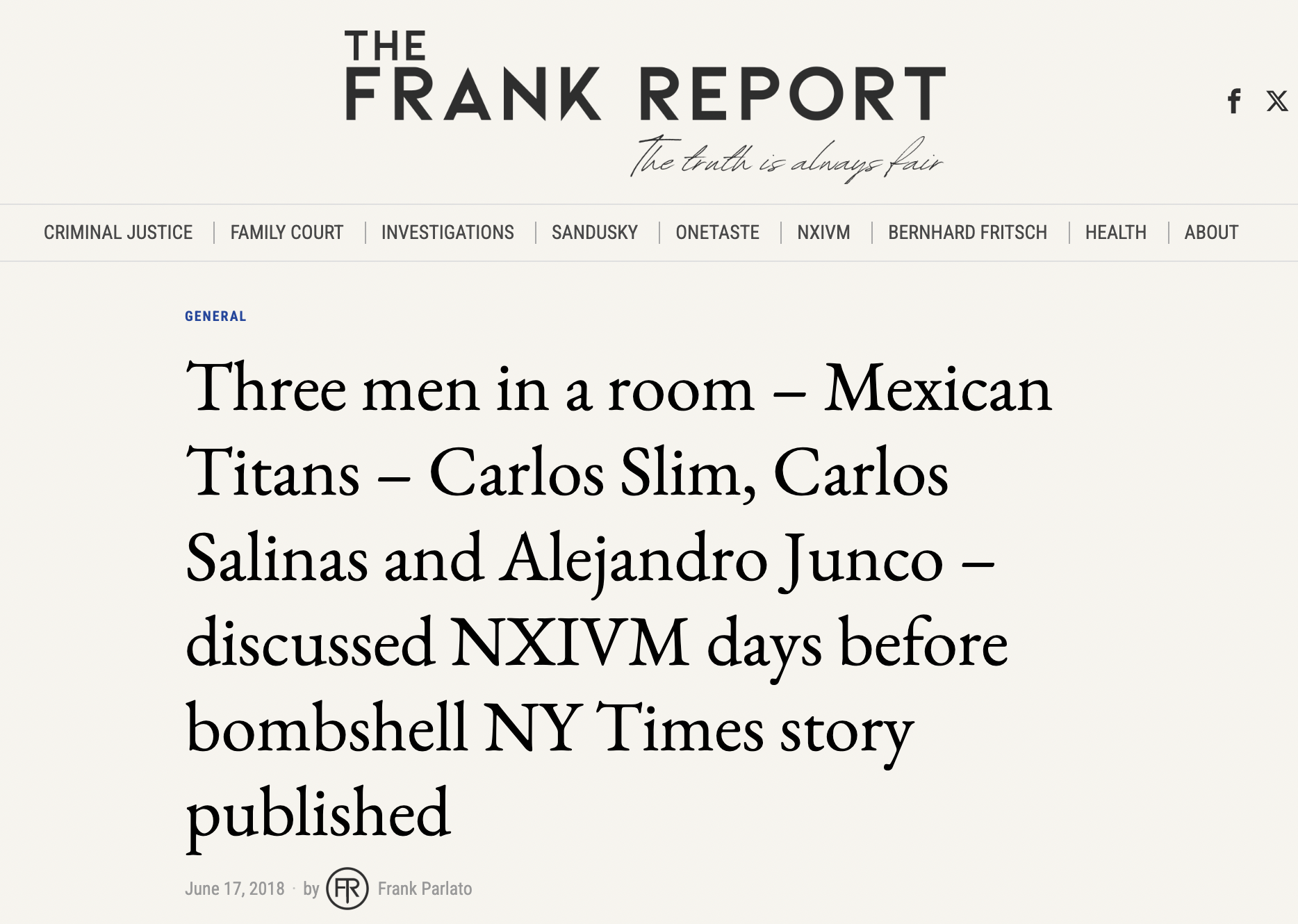
All three had close family members deeply involved in NXIVM and personally close to Mr. Raniere — involvement they reportedly viewed for years as a growing threat to their families, generating mounting hostility toward both Mr. Raniere and the organization.
The chronology, the source documents, and the prosecutor’s own on-camera statement are independently verifiable above.